


CRYING
You have developed a strong bond, so baby may cry when left with other caregivers. Baby may also cry when hearing another baby cry. He may cough or make noise to attract attention.
SLEEPING ZZZZZZZZZ
daily (approx.)
14-15 hrs
Will probably take 2 naps during the day.
NAPPIES
Babies who eat a variety of food will pass stools that vary in colour and consistency. New foods such as fruits and vegetables may result in softer stools of different colours. For example, a baby who eats green vegetables may pass green stools.
HUNGER CUES & FEEDING MILESTONES
- Reaches for food and shows excitement when hungry.
- Can chew and mash food with gums.
- Bats spoon away from mouth when full.
MOTOR-PHYSICAL DEVELOPMENT
- Starts to crawl with stomach off of floor; sits upright without support; may be able to pull self to standing.
- By 8 months: can roll both ways (front to back and back to front); supports whole body weight on legs; controls upper body and arms.
- Begins to self-feed finger foods and manipulate objects (e.g. spoon).
COGNITIVE DEVELOPMENT
- Tries to find objects you have hidden.
- Connects animals with actions and sounds (e.g. meow, bark).
- Develops stronger memory skills.
- Starts to see cause and effect (e.g. things fall when dropped).
SOCIAL DEVELOPMENT
- New mobility piques curiosity and increases exploration of world.
- Don’t keep him propped up in a chair all day – Encourage free play on the floor.
- Begins showing emotions such as affection, anger, joy or fear.
- Responds when other people express emotions.
ON THE GO CONVENIENCE
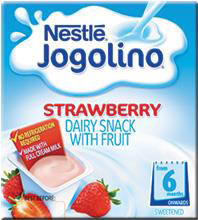
Your little crawler is on the move. Stay one baby step ahead with Nestlé JOGOLINO. It is made with full cream milk and requires no refrigeration which means that it’s perfect for mommies on the move. Put a few Nestlé JOGOLINO dairy snacks in your little one’s baby bag to make sure you always have a snack at hand.
Related articles


The Confident Eater from around nine months
As your baby develops his chewing and swallowing ability, he is now ready to take on more challenging, richer tastes and textures.
5 mins to read

The Explorer Eater from around seven months
When your baby has successfully learned to eat solid food, he is ready to explore new tastes.
5 mins to read

Your baby sits alone and pivots into a crawling position. He crawls on extended limbs and holds on to furniture to pull himself up to stand.
5 mins to read

Baby meal planner 10 to 12 months
Around 10-12 months, babies are ready for harder finger foods & self-feeding.
1 min to read

A day in your 6 to 7 month old’s diet
This sample day was created by registered dieticians to help meet the nutrition goals for your 6 to 7 month old baby.
5 mins to read

Baby meal planner 8 to 10 months
Around 8-10 months, increase the variety and texture of foods for your baby.
1 min to read

When do we introduce solids to the diet
Birth to six months
It is too early to introduce solids if your baby:
5 mins to read

There is an increased risk of allergy when solids are introduced too early, i.e. before
2 mins to read

And it all began with Henri Nestlé’s mission to give babies a good foundation in life
5 mins to read

Setting the stage for his first taste
Here are a few tips for getting your baby ready to take that first spoonful of baby food.
5 mins to read


Nestlé Infant Cereals Infograph
Celebrating trusted spoonfuls for 150 years with infant cereals
5 mins to read

Not all sugars are created equal and therefore not all sugars are bad. The main role of food is to provide energy and nutrients for growth and development.
5 mins to read
The learner eater from around six months
The choice of your baby’s first solid food is very important. It must be suitable for her developing digestive system and be finely textured and easy to swallow.
5 mins to read

Why do we introduce solids to a babys diet
About halfway through the first year of life, babies begin to outgrow their liquid diet, which no longer supply them with enough nutrients to support their rate of growth.
5 mins to read

A new texture, taken for the first time, may make your baby gag out of surprise.
5 mins to read

Choose a spoon that is small and smooth-edged. You may find plastic or rubberised spoons easier to use.
5 mins to read

Your 6 to 12 month old’s hunger & fullness cues
Understanding your baby's hunger & fullness cues. Learn to identify when to feed and when they're full.
3 mins to read